This paper presents the initial development of an intelligent interactive virtual reality (VR) shopping experience designed to investigate consumer behaviour in a simulated retail environment. The application focuses on intuitive controls and user-friendly interactions to provide a realistic shopping experience, and includes features such as interactable objects, sound effects, and haptic feedback to enhance user engagement. While the primary focus of this work was on the initial design and implementation of the VR application, future work will involve developing intelligent AI features and evaluating user experience. This research aims to contribute to the growing insights on intelligent VR retail environments and offer practical guidance for developing immersive shopping experiences.
Keywords: Virtual Reality (VR), Interactive Virtual Shopping, Consumer Behaviour, E-Commerce, Retail Environment, Artificial Intelligence (AI)
I. INTRODUCTION
In recent years, virtual reality (VR), a technology that allows users to immerse themselves in a simulated 3D environment, has increasingly been used in areas like retail. Due to the realistic perspective it provides, it has been used for product visualisation and demonstrations, shopping experience personalisation, and examining consumer behaviour [1].
Artificial intelligence (AI) has also been increasingly used in e-commerce applications to implement AI assistants, voice searching, and recommendation tools, and understand consumer’s behaviour while shopping [2]. The future of AI in e-commerce has great potential to integrate with emerging technologies including VR, reshaping how businesses interact with and understand their customers [3].
Existing research on consumer behaviour in VR has primarily focused on the general aspects of user engagement and satisfaction [4]. While these studies provide valuable insights, they often overlook the specific interactions and decision-making process that occur in response to promotional offers within a VR shopping experience. This gap in knowledge limits retailers from utilizing their marketing strategies, not just for their sales rates, but for maximizing consumer engagement and shopping satisfaction.
This paper presents the early development of an intelligent interactive VR shopping experience designed to understand how consumers interact with products and how they may make decisions in response to offers involving the products, including buy-one-get-one offers and percentage discounts. The application's design was tailored towards users with minimal experience with VR technology, focusing on intuitive controls and user-friendly interactions. By understanding these interactions and responses, retailers can better tailor their VR shopping strategies to enhance consumer engagement and experience, and drive sales.
II. METHODOLOGY
A. Background of the Application
This application offers users the opportunity to explore a virtual store using a VR device (MetaQuest 3 headset [5]). Users can view and interact with products using controllers, and add products to their shopping cart. At the end of the shopping experience, they can purchase the items in their cart. Promotions are available for each type of item, and the goal is to determine how these offers may influence user purchasing decisions.
B. Development Tools
The VR application was developed in Unity using its XR Interaction Toolkit [6] and several C# scripts to assist in specific functionalities, and was tested with the Meta Quest 3 headset. Assets, materials, icons, and sound effects were imported from the Unity Asset Store [7], SketchFab [8], Vecteezy [9], Unsplash [10], Pixabay [11], and Flaticon [12]. These assets were selected for their quality and suitability for a beach-themed retail environment.
C. Virtual Store Design
The virtual store was designed according to a “beach day” concept, focusing on selling beach apparel. To emulate an immersive summer vibe to enter, the store was featured with large windows to let in “natural light”, and a sandy terrain was created to be visible from the windows. The store layout is rectangular and simple, ensuring all items are visible to the user when turning 360 degrees. This design aims to prevent the user from being overwhelmed and facilitates easy navigation.
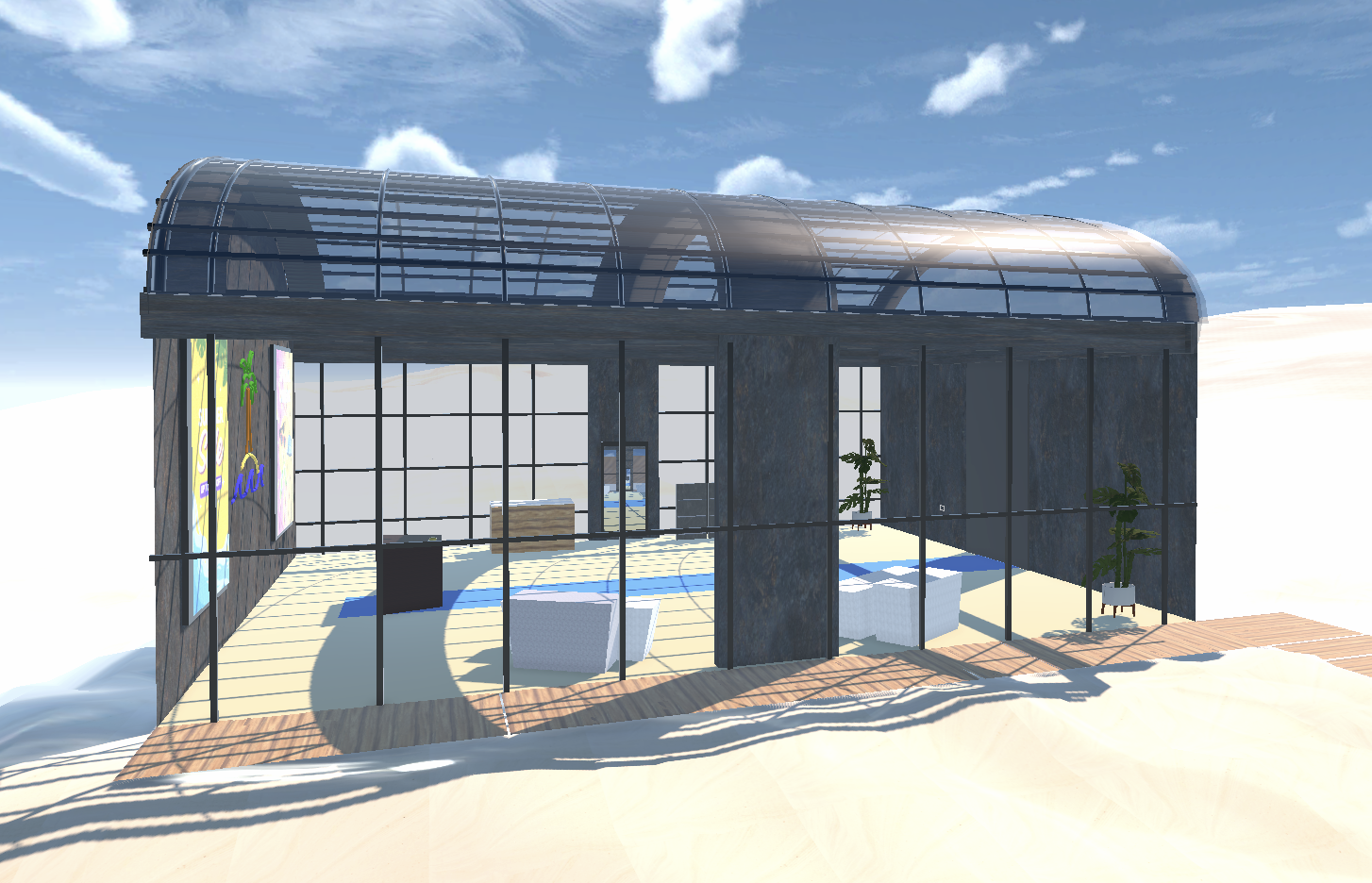 Fig. 1. Virtual store design with sandy terrain.
The store is divided into three sections: hats, footwear, and sunglasses, with each type of garment offering its own discount.
D. Locomotion
Locomotion refers to how the user can move around in the environment. Two main features were applied:
1)
Snap Turning: This feature rotates the user by a fixed angle when the thumbstick is toggled. This feature was chosen over continuous turning, which smoothly rotates the user over time, as snap turning is often less likely to cause motion sickness in users [13–14].
2)
Teleportation: The user can teleport from one position to another within the designated area. This feature prevents the user from accidentally teleporting themselves outside the store area or into other objects like furniture or walls. Teleportation reticles or visual indicators appear when the user’s rays point to a valid teleportation area, indicating the position where the user will land.
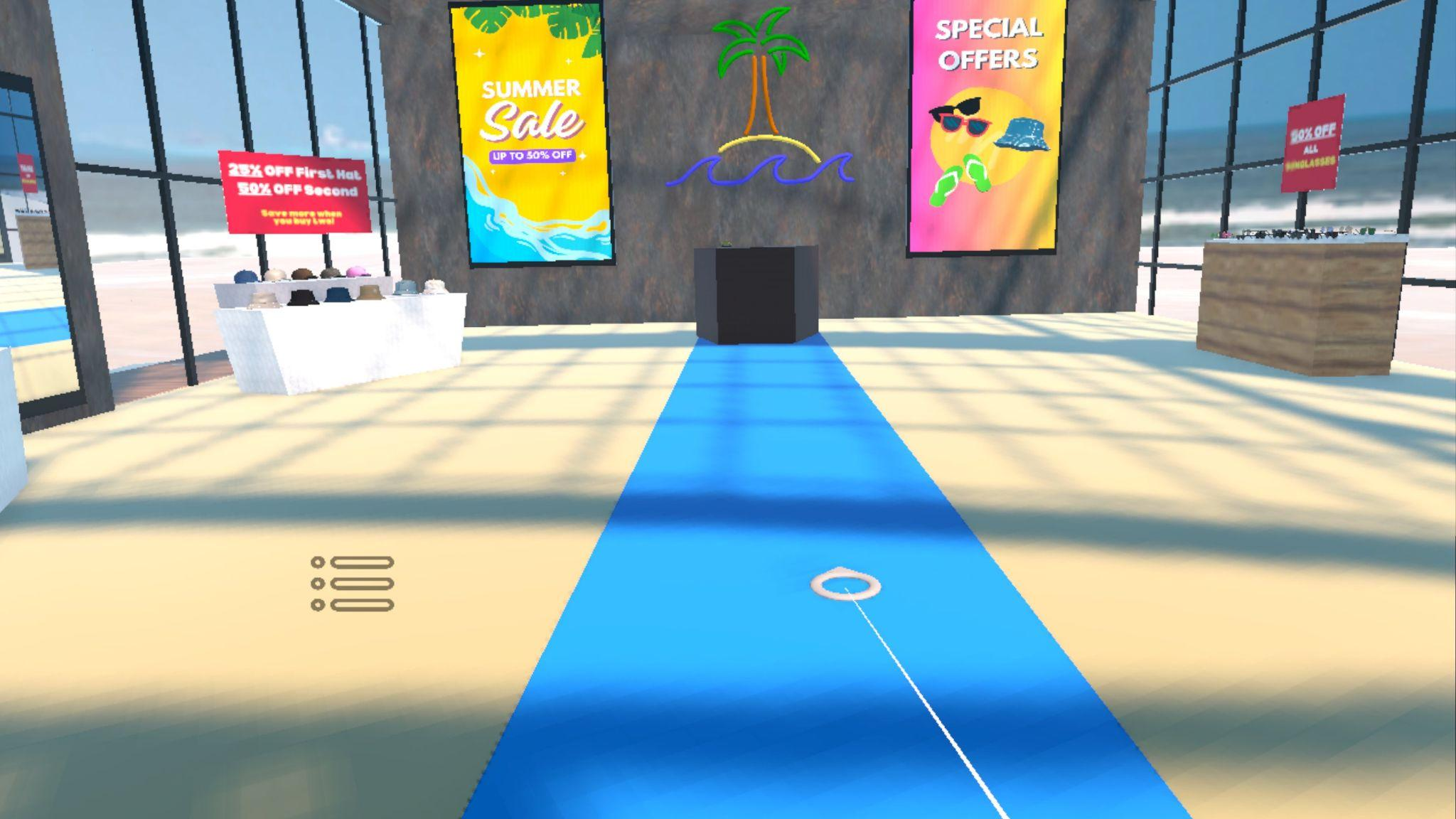 Fig. 2. Teleportation reticle indicating a valid teleportation area.
E. Assets
Fig. 2. Teleportation reticle indicating a valid teleportation area.
E. Assets
Assets used for the application, including sunglasses, hats, and footwear, were mainly imported from the aforementioned sources. Textures were customized to align with the beach-themed store. The furniture, including the display tables and platforms, was built using ProBuilder [15]. Two mirrors were also created by adding inverted planes with cameras attached to accurately display reflections.
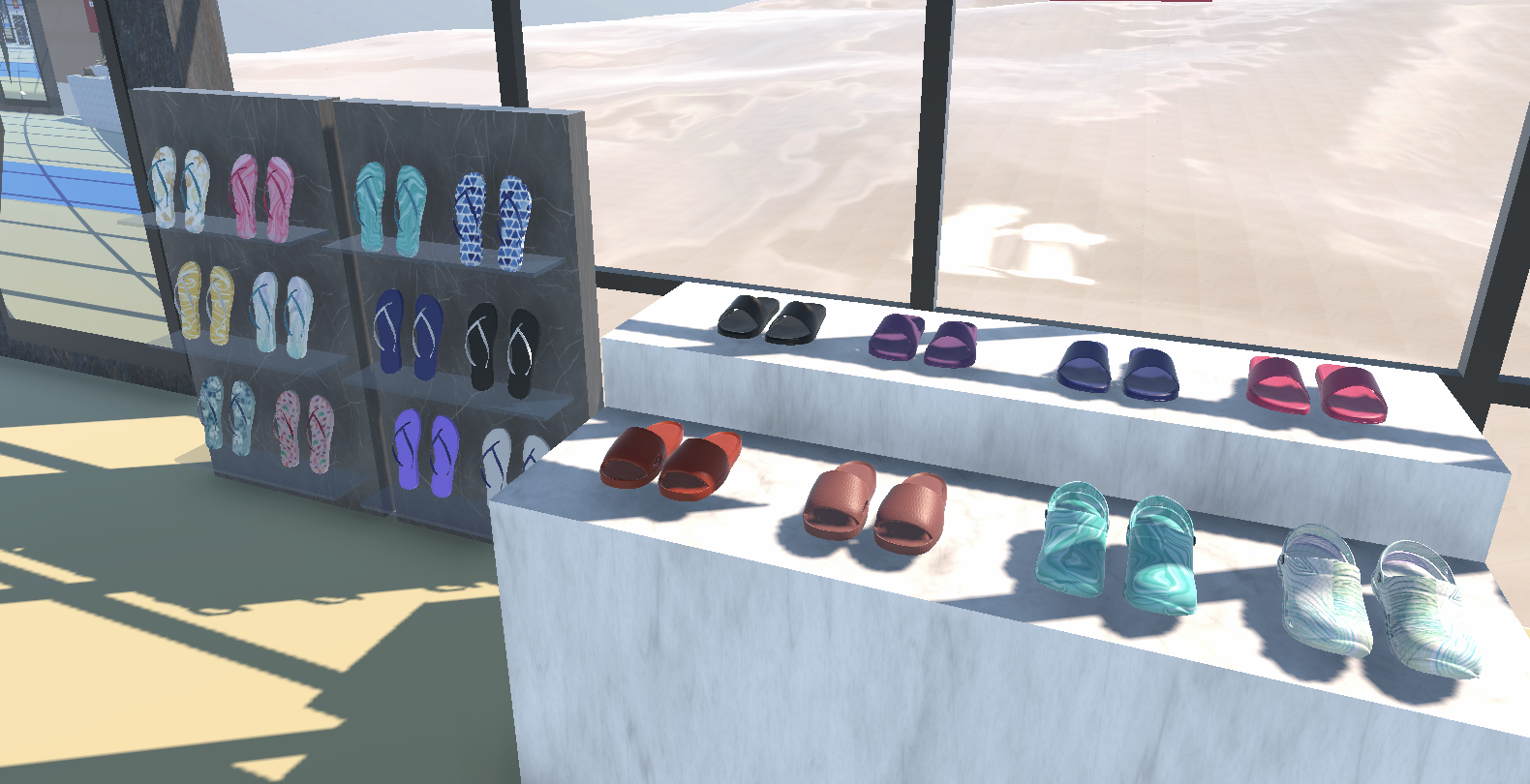 Fig. 3. Footwear assets.
Promotion banners were created using a graphic design tool and attached to signs hung over their corresponding items to bring more attention to available offers. Additionally, animated graphics were produced and attached to the screens behind the counter as video clips playing on loop to simulate in-store video advertisements.
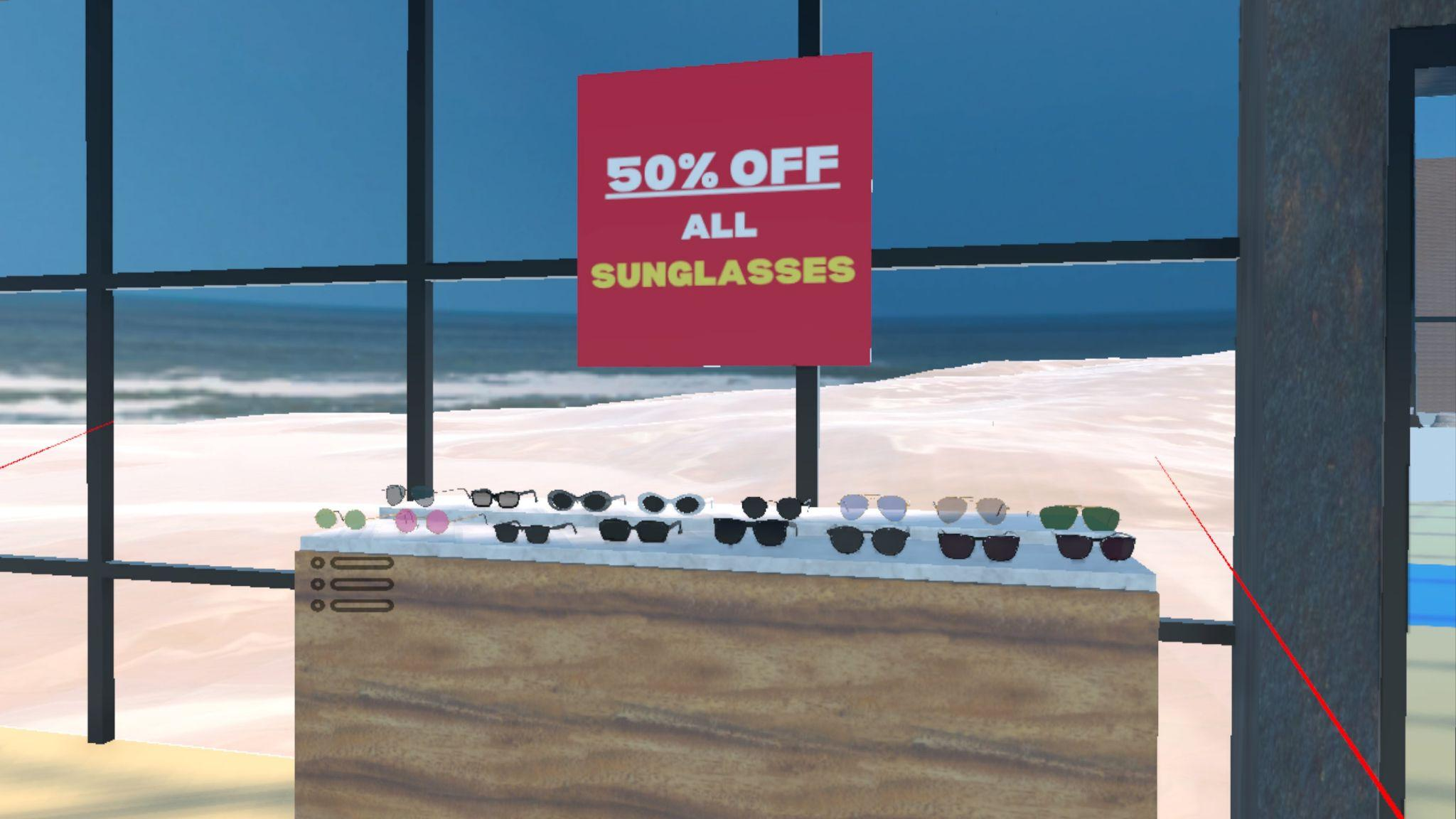 Fig. 4. Promotion banner showing percentage discount for sunglasses.
F. Interactivity
Fig. 4. Promotion banner showing percentage discount for sunglasses.
F. Interactivity
To make it more convenient for the user to interact with the environment, XR Ray Interactors were implemented, allowing users to point at and select interactables from afar instead of having to teleport directly in front of the item. When the user hovers over a selectable item, the originally red rays turn white, giving clear indications to the user. Another feature of the ray interactors that was applied is the Force Grab property, which moves an XR Grab Interactable object to the user’s hand when selected. Similar to real-life shopping experiences, this allows the users to inspect the items at a closer level.
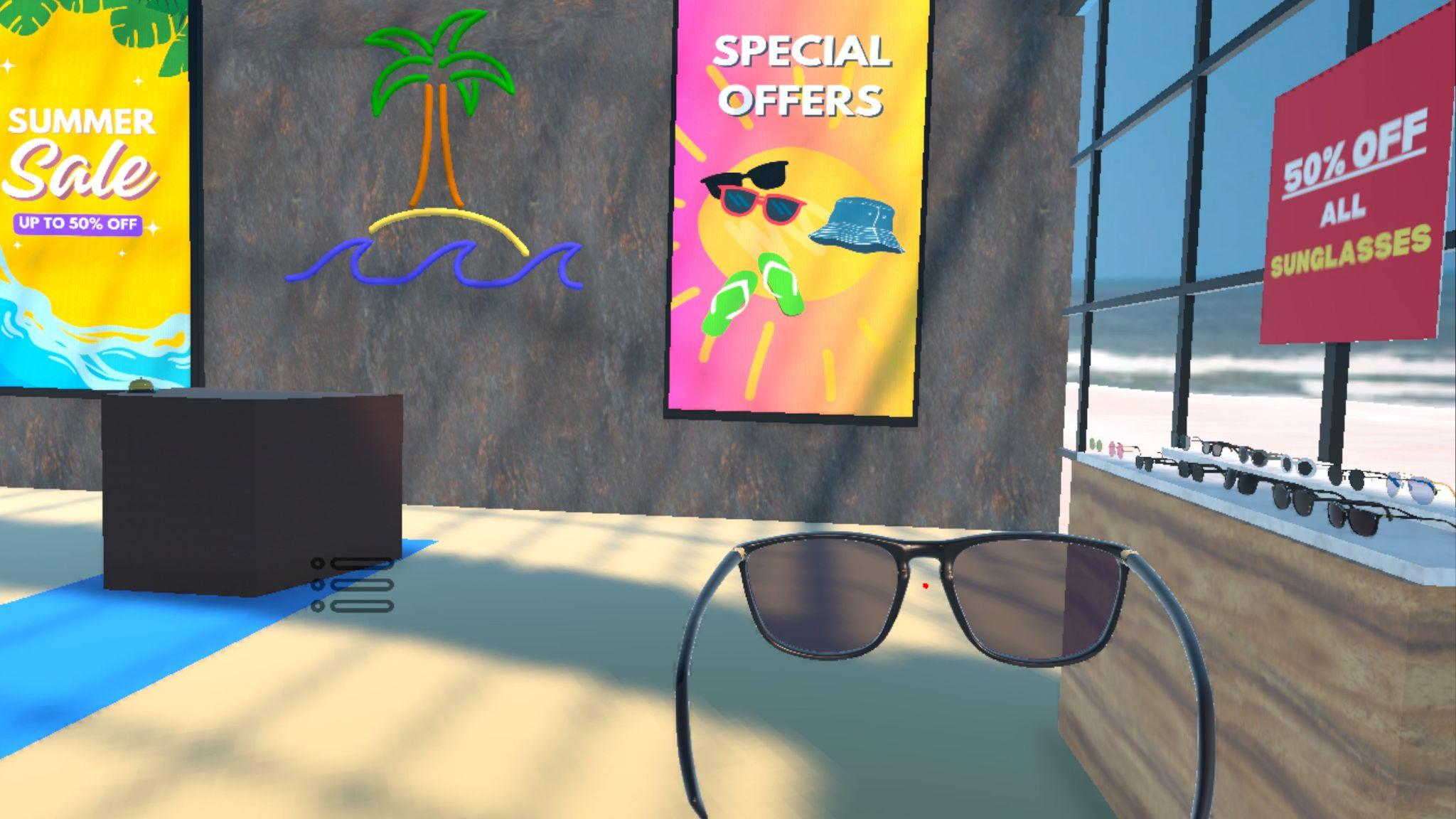 Fig. 5. Sunglasses being held in the user’s hand after grabbing it from afar.
Making the experience seem more realistic, all items on display, with all of them being XR Grab Interactable objects, are affected by basic laws of physics. This means they can collide with other objects, and when dropped by the user, they fall to the ground as they would in real life. However, to facilitate a smoother user experience and reduce clutter in the environment, a C# script was added to automatically return the moved items to their original positions after a set time delay.
To further mimic a realistic shopping experience, sockets were created for the user’s head and face, serving as a placeholder for hats and sunglasses, respectively, allowing the user to try on different items and check their reflections in the mirror. Attach points on both the sockets and the interactable items ensure they align properly on the user’s head or face when tried on. Additionally, enforcing specific layers for each socket prevents hats from being placed in the sunglasses position, and vice versa.
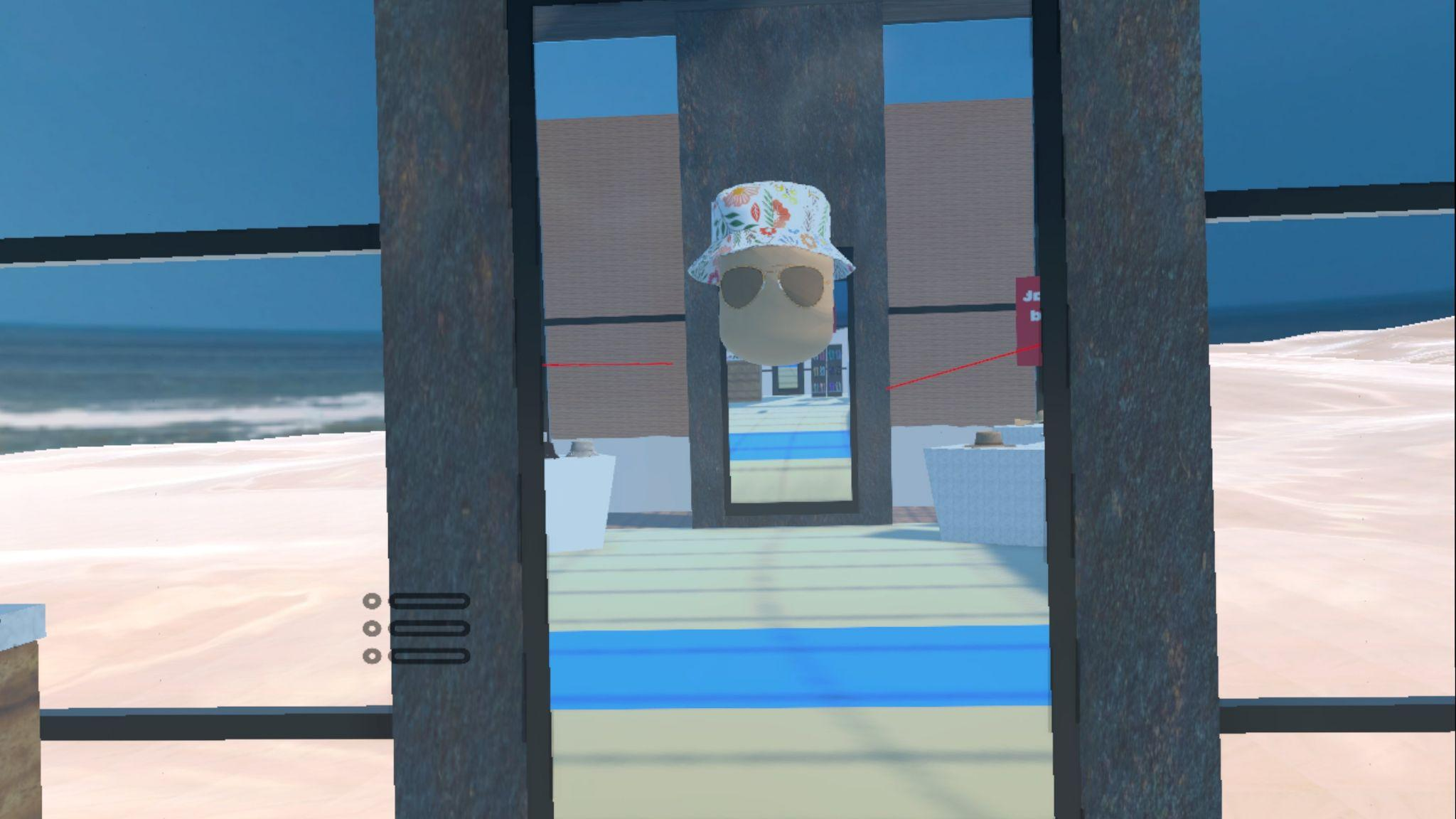 Fig. 6. Reflective mirror — user trying on a hat and a pair of sunglasses.
Finally, haptic feedback was implemented to enhance imagination and interaction by simulating a sense of touch. Whenever the user hovers over an item, the controllers vibrate slightly; when an item is selected, the controllers have a slightly stronger vibration. Sound effects reacting to the player’s actions were added to further improve the user’s immersion in the environment.
G. User Interface
A user interface was implemented to help the user navigate the environment and become more aware of various items and offers. For example, when the user first starts the game, a set of instructions is automatically displayed along with an avatar, explaining the basic controls of locomotion and interactions.
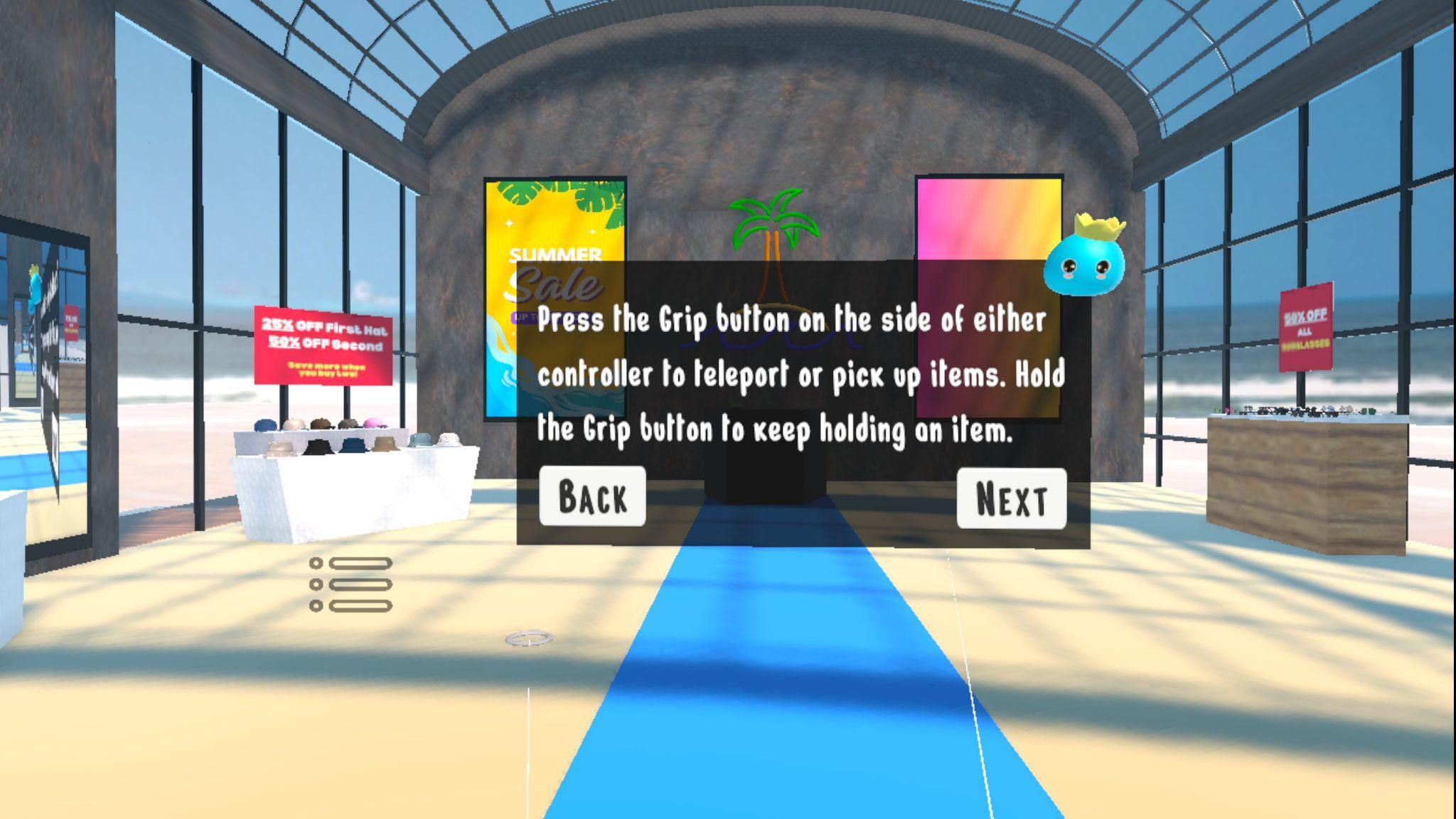 Fig. 7. Opening instructions.
When the user hovers over a purchasable item, its original price and promotion offer will automatically be shown. Additionally, when the item is selected, an
Add to cart button will appear, allowing the user to add the item to their shopping cart.
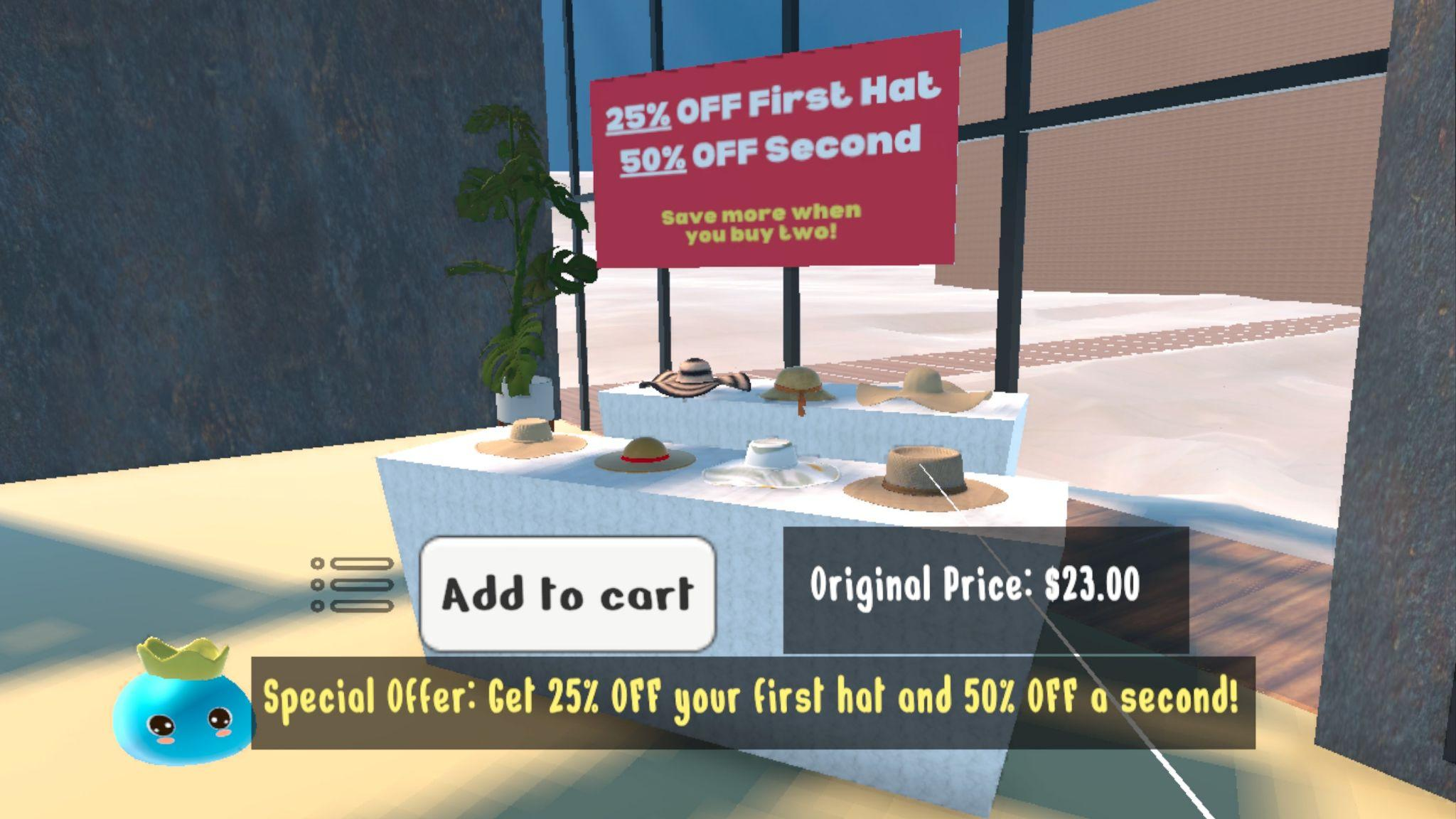 Fig. 8. Price and offer for the selected hat, with an Add to cart button.
At all times, the user has access to the menu button (represented by the three-bullet icon), which allows the user to view their cart, or restart the simulation.
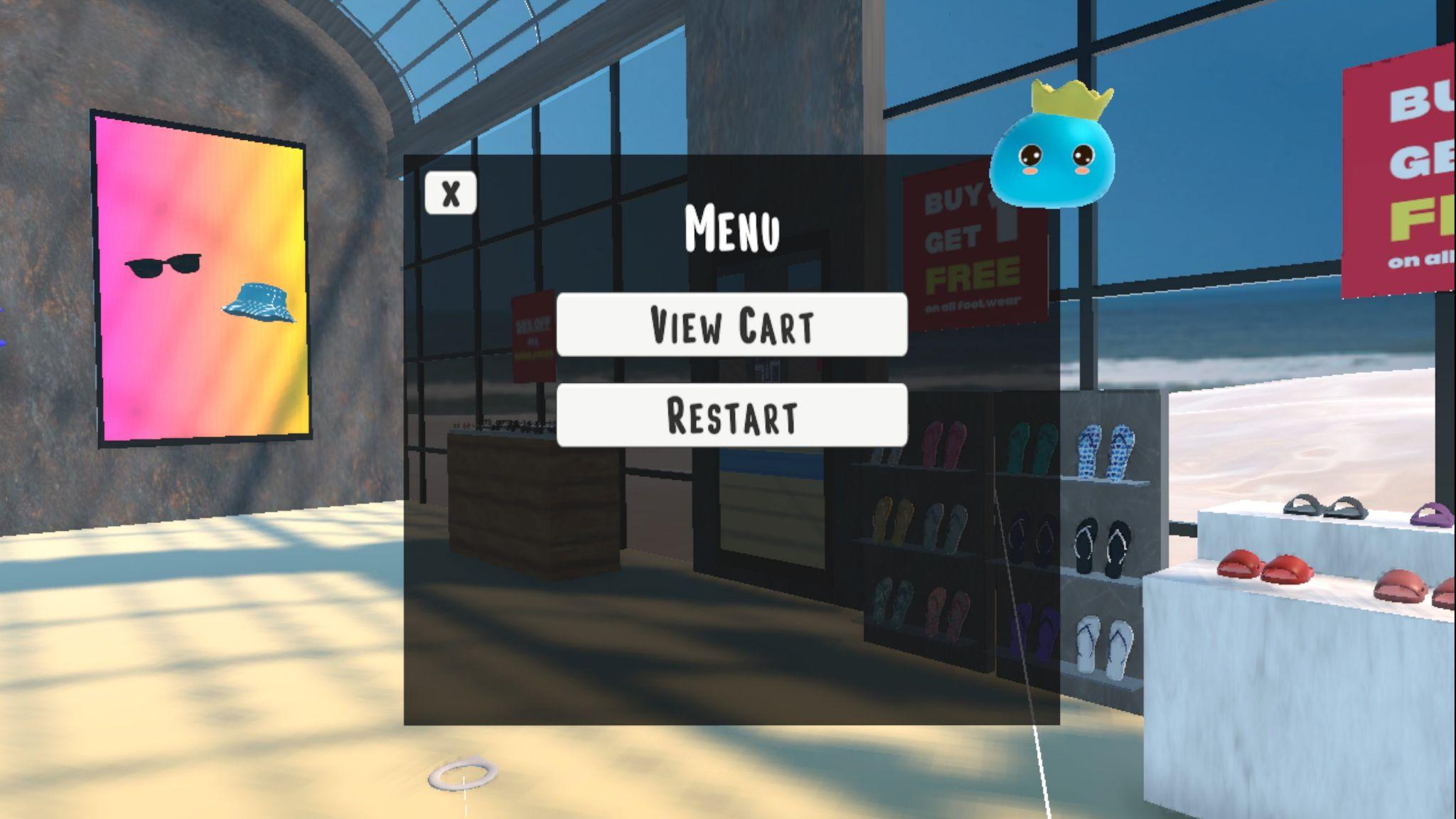 Fig. 9. Menu options.
When viewing their shopping cart, users can see the names of the items added as well as their prices. Users have the option to remove items by clicking on the trash icons on their respective lines.
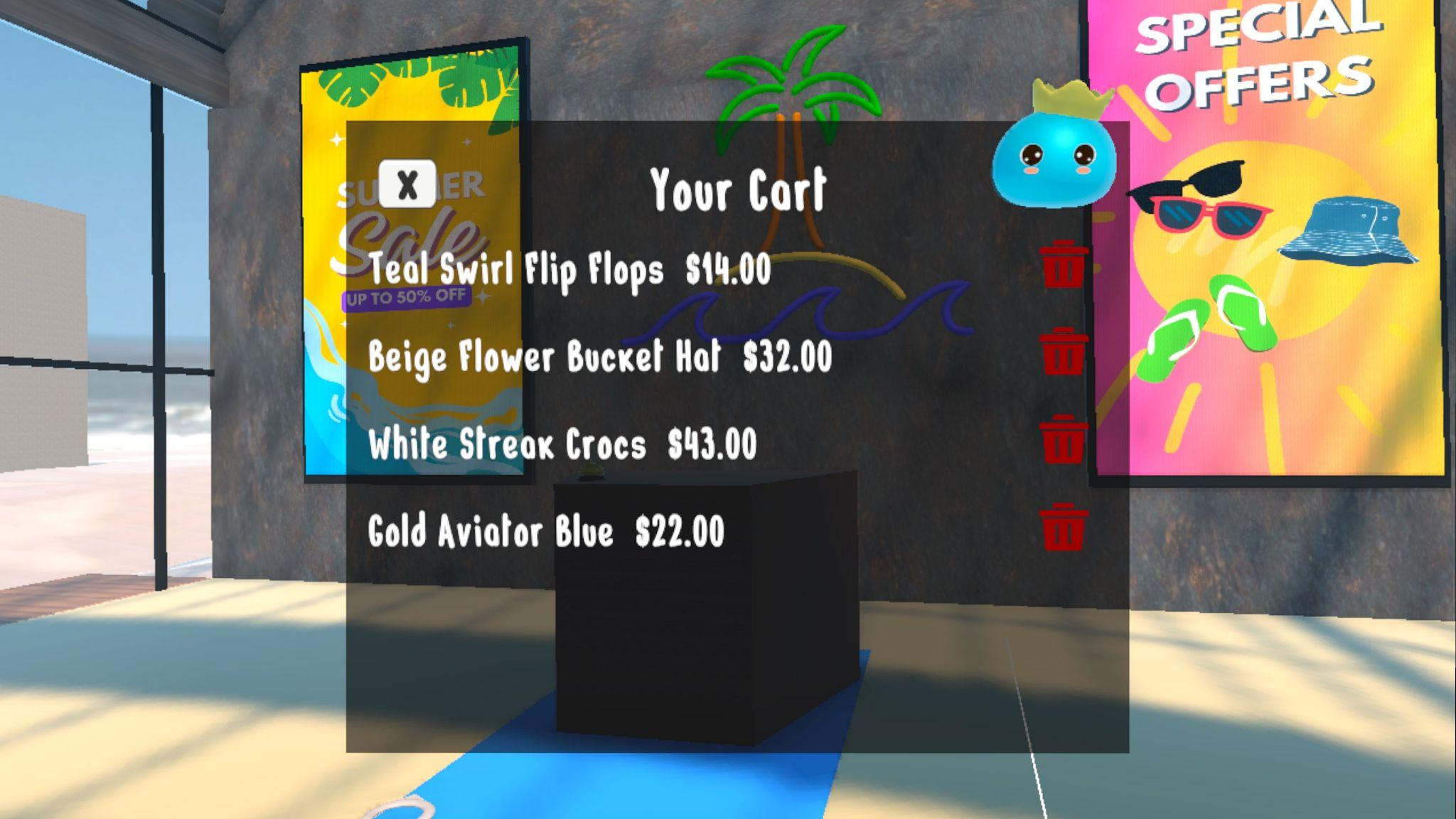 Fig. 10. View of items in the user’s shopping cart.
When the user is ready to purchase the items in their cart, they can ring the bell at the counter, which will prompt a confirmation message. If the user decides to continue, they complete their purchase, and may choose to shop again or quit the simulation.
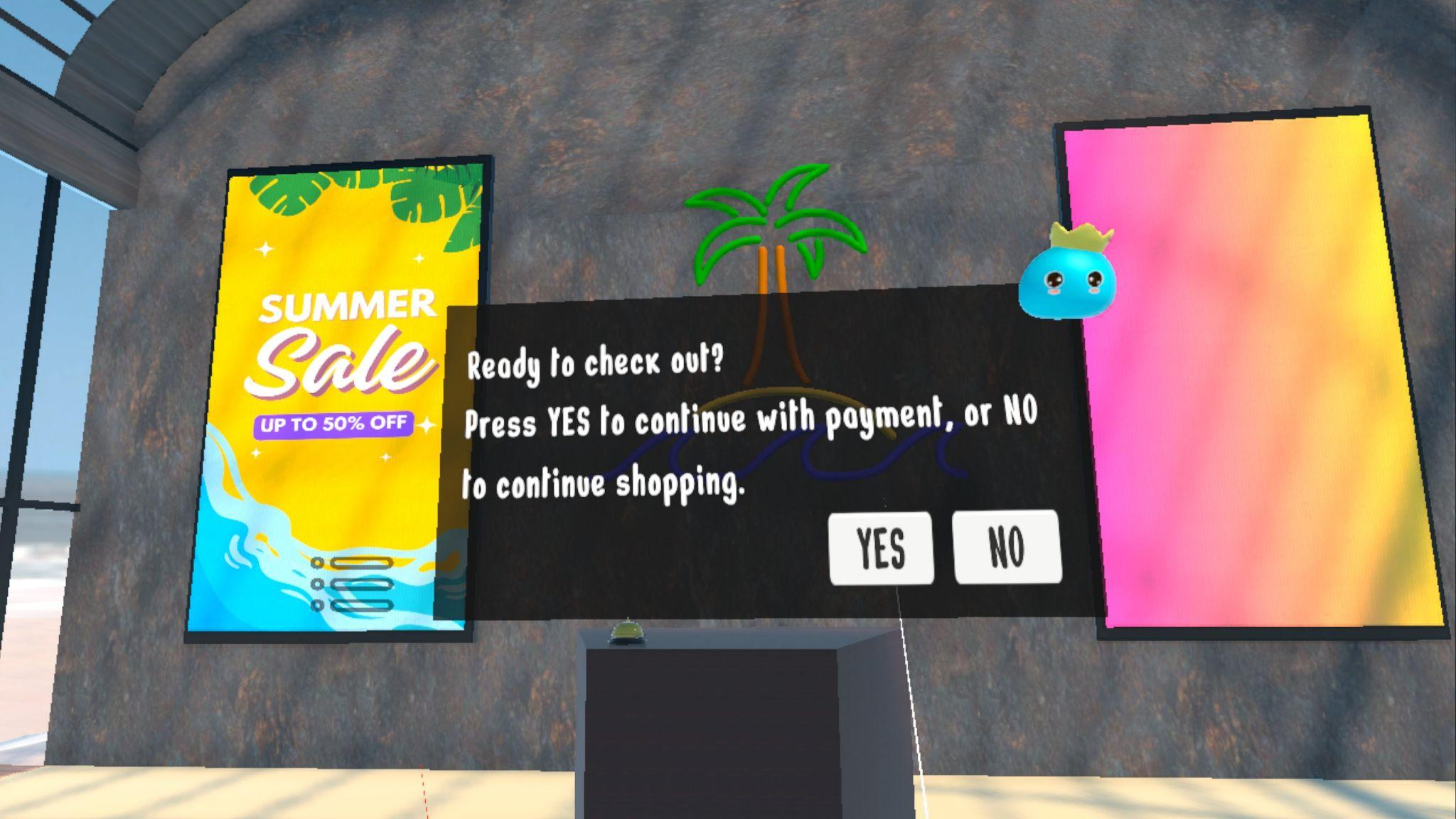 Fig. 11. Payment message after ringing the bell at the counter.
H. Future AI-Features
Fig. 11. Payment message after ringing the bell at the counter.
H. Future AI-Features
The application aims to implement intelligent AI features to understand consumer interactions with products. The proposed features include:
●
Integrated shopping assistant — an AI-driven avatar accompanies the customer throughout the shopping experience, assisting them through conversations, answering questions and comparing products.
●
Personalised product recommendations — the application analyses the customer’s browsing behaviour and past purchases.
●
Dynamic offer generation — based on the customer’s shopping behaviour, the application offers personalised discounts.
●
Customer journey analytics — the application analyses users’ interaction with each section of the store including engagement with the products, time spent and the shopping paths in the store.
III. CONCLUSION
This study presents the development of an interactive VR shopping experience designed to explore consumer behaviour in a simulated retail environment. The application focuses on the intuitive controls and user-friendly interactions, providing a realistic and engaging shopping experience that mimics real-life scenarios. While the first phase of development has been successfully completed, the AI features have yet to be implemented, and the evaluation of the application remains a critical next step.
Future work will involve enhancing the application with AI features and conducting user evaluation with a group of participants to evaluate the effectiveness of the VR shopping experience. This will include assessing the user engagement, ease of use, and overall satisfaction. The results of these evaluations will provide valuable insights into consumer behaviour and help refine the application for broader use. Additionally, the future work could explore the implementation of advanced analytics to capture user interaction data, further enhancing the understanding of consumer decision-making processes in VR retail environments.
We thank the AI Management Institute (AIMI), Abu Dhabi School of Management (ADSM), UAE for their support of this project and for the opportunity provided through the AI summer research initiative.
REFERENCES
[1] Erensoy, A., Mathrani, A., Schnack, A., Elms, J., & Baghaei, N. Consumer behavior in immersive virtual reality retail environments: A systematic literature review using the stimuli-organisms-responses (S-O-R) model. Journal of Consumer Behaviour, vol. 23, issue 6, pp. 2781–2811, 2024. DOI: 10.1002/cb.2374
[2] Fedorko, R., Kráľ, Š., Bačík, R. Artificial Intelligence in E-commerce: A Literature Review. In: Saraswat, M., Sharma, H., Balachandran, K., Kim, J.H., Bansal, J.C. (eds) Congress on Intelligent Systems. Lecture Notes on Data Engineering and Communications Technologies, vol 111. pp 677–689, 2022. Springer, Singapore. DOI:10.1007/978-981-16-9113-3_50
[3] Raji, M. A., Olodo, H. B., Oke, T. T., Addy, W. A., Ofodile, O. C., & Oyewole, A. T. E-commerce and consumer behavior: A review of AI-powered personalization and market trends. GSC Advanced Research and Reviews, vol. 18, issue 3, pp. 66-77, 2024.
[4] Ambika, A., Shin, H., & Jain, V. Immersive technologies and consumer behavior: A systematic review of two decades of research. Australian Journal of Management, vol. 50, issue 1, pp. 55-79, 2025.
[5] Meta Quest 3. Meta. 2025. [Online]. Available: https://www.meta.com/quest/quest-3/
[6] XR Interaction Toolkit. Unity. 2025. [Online]. Available: https://docs.unity3d.com/Packages/com.unity.xr.interaction.toolkit@3.1/manual/index.html
[7] Asset Store. Unity. 2023. [Online]. Available: https://assetstore.unity.com/
[8] Sketchfab. Sketchfab. 2025. [Online]. Available: https://sketchfab.com/
[9] Vecteezy. Vecteezy. 2025. [Online]. Available: https://www.vecteezy.com/
[10] Unsplash. Unsplash. 2025. [Online]. Available: https://unsplash.com/
[11] Pixabay. Pixabay. 2024. [Online]. Available: https://pixabay.com/
[12] Flaticon. Freepik. 2025. [Online]. Available: https://www.flaticon.com/
[13] Sargunam, S. & Ragan, E. Evaluating joystick control for view rotation in virtual reality with continuous turning, discrete turning, and field-of-view reduction. In Proceedings of the 3rd International Workshop on Interactive and Spatial Computing (IWISC '18). Association for Computing Machinery, New York, NY, USA, pp. 74–79, 2018. DOI: 10.1145/3191801.3191815
[14] Farmani, Y & Teather, R. Viewpoint Snapping to Reduce Cybersickness in Virtual Reality. 2018. DOI: 10.20380/GI2018.23
[15] About ProBuilder. Unity. 2025. [Online]. Available: https://docs.unity3d.com/Packages/com.unity.probuilder@6.0/manual/index.html