PlanItAll is an innovative event management platform designed to simplify the planning process by bringing together multiple vendors and advanced tools into one seamless interface. Users can manage every detail of their event, like venues, catering, décor, entertainment, and more, all from a single platform. Enhanced with Augmented Reality (AR), PlanItAll allows users to visualize and adjust event layouts in real time, giving them a clear, interactive preview of their space before the event day. The platform also includes smart suggestion tools that adapt to user preferences, helping them discover relevant services and optimal setups based on their choices and past selections. By centralizing communication and coordination, PlanItAll reduces the risk of miscommunication between vendors and makes handling last-minute changes easier. It delivers a unified, intuitive, and immersive planning experience that not only simplifies the planning process but also enhances creativity and engagement.
Keywords: Event Management, Service Integration, Augmented Reality, AI Customization, User Engagement, Event Planning.
I. INTRODUCTION
Event planning is a complex process that involves coordinating multiple vendors, such as venues, florists, caterers, lighting experts, and entertainers, which often leads to miscommunication, scheduling conflicts, and last-minute errors, making the entire experience stressful and inefficient. The global event management industry is massive, valued at over one trillion dollars, and experts predict it will grow significantly in the coming years. This growth highlights the increasing demand for tools that can handle the challenges of organizing events efficiently. However, many current tools, such as Eventbrite, Cvent, and Trello, have notable weaknesses. These platforms often lack proper integration with other systems, struggle to support real-time communication, and do not offer the flexibility needed for different types of events. As a result, event planners face issues like scheduling errors, miscommunication, and higher costs, all of which make their work harder.
The core problem is that today’s event planning tools do not provide a complete, easy-to-use solution. This leads to poor coordination and events that fail to meet the expectations of those involved. There is a clear need for a better system—one that is simple, efficient, and able to adapt to the diverse needs of event organizers. PlanItAll is designed to streamline event planning by integrating Augmented Reality (AR) and Artificial Intelligence (AI). With AR, users can visually arrange and modify event details in real-time, ensuring precise setups before finalizing their plans. Meanwhile, AI provides intelligent recommendations, optimizes layouts, and enhances vendor coordination, reducing human error and simplifying decision-making. By bringing all event services into a single system, PlanItAll improves efficiency, enhances communication, and transforms event planning into a smoother and more user-friendly experience.
This work contributes to event management technology in several ways. First, it introduces PlanItAll as a unified platform that overcomes the shortcomings of existing tools. Second, it provides insights from interviews with event planners, offering a deeper understanding of their needs. Third, it creates a strong testing approach to evaluate event planning systems, ensuring they are both practical and reliable. Finally, PlanItAll is built to grow and adapt, supporting various event types and setting the stage for future improvements in the field.
II. LITERATURE REVIEW
To comprehend the scope, the literature related to the scope was reviewed. This section presents a brief summary of multiple articles as follows:
A. Wedding Planner Application using AR
The WedDream project introduces a wedding planner app with Augmented Reality (AR), allowing users to design their dream wedding venue while managing tasks like budgeting, guest lists, and checklists. The app improves on existing wedding planners like The Big Day, LadyMarry, and MyWed by combining standard planning tools with AR venue visualization, helping users customize their space before the big day [1]. While WedDream focuses only on weddings, PlanItAll takes this concept further by offering a complete event planning experience for all types of events. Unlike WedDream, which mainly provides AR venue design, PlanItAll integrates AI to personalize event recommendations, optimize layouts, and simplifies vendor selection. It also allows users to not just plan but book all services in one place, creating a fully interactive and stress-free event planning process. By combining AR visualization with AI-powered automation, PlanItAll upgrades event management into a highly personalized experience.
B. Augmented Reality in Event Promotion
The study presents an Augmented Reality (AR) application designed to promote events in urban environments, creating an immersive and interactive experience for users. Developed using Django Rest Framework (DRF) for backend services and Unity for AR functionalities, the app allows users to register, view events, interact with virtual elements, and provide feedback on attended events. The study highlights the app’s potential for enhancing urban engagement, making event discovery more dynamic and engaging. However, the focus remains on event promotion rather than comprehensive event planning and execution [2]. PlanItAll expands this concept by integrating AR not just for event discovery but for the entire event planning process. Instead of simply viewing events, users can design, customize, and visualize their own event spaces in real time using AR, ensuring that layouts, decorations, and seating arrangements are planned to their preferences before booking. Additionally, AI-driven automation personalizes vendor recommendations, optimizes event layouts, and streamlines service coordination, making event planning more efficient and reducing last-minute changes. By combining AR-powered visualization with AI-driven customization, PlanItAll offers a more advanced, interactive, and user-centered approach to event management, going beyond promotion to provide a complete end-to-end event planning experience.
C. AI based Event Management Web Application
The AI-Based Event Management web application helps users search for, register, and receive event recommendations based on their interests. It categorizes events like webinars, workshops, and conferences, making it easier for users to find relevant opportunities [3]. However, its AI functionality is limited to basic recommendations and recent event tracking. PlanItAll takes AI a step further by not just recommending events but actively assisting in the entire event planning process. Instead of simply suggesting events, PlanItAll’s AI analyzes user preferences, past events, and space availability to generate personalized event layouts, themes, and vendor suggestions. AI-driven automation also helps users optimize budgets, suggest alternative service providers, and ensure real-time adjustments based on changing needs. Combined with Augmented Reality (AR), PlanItAll allows users to visualize and modify their event setups before confirming them, ensuring that AI-generated plans align with their vision. This upgraded AI functionality moves beyond passive recommendations to active event planning and execution, making PlanItAll a more intelligent, adaptive, and user-centered event management platform.
D. The Impact Of Covid-19 On Event Management Industry
The COVID-19 pandemic caused massive disruptions in the event management industry, leading to widespread cancellations and financial losses. The industry, which thrives on in-person gatherings, suffered severely due to lockdowns, travel restrictions, and safety concerns. Many companies shifted to virtual events, but these lacked the engagement and interaction of physical gatherings [5]. The COVID-19 pandemic forced strict lockdowns that lasted anywhere from a few months to over a year in some regions, drastically limiting large gatherings. Despite restrictions, many people still held small, intimate events such as weddings, but they struggled to find proper planning services to assist them. Traditional event management platforms were not designed to accommodate at-home or restricted-space events, leaving individuals to handle everything on their own. PlanItAll offers a solution for these situations by allowing users to organize and visualize their events within their own space using Augmented Reality (AR). With AR, users can integrate elements like seating arrangements, decorations, and lighting into their environment, previewing and adjusting them in real-time before finalizing the setup. Additionally, PlanItAll connects users with service providers who bring catering, decorations, and other event essentials directly to their location, ensuring an ideal experience even under restrictions. This innovation ensures that important moments can be celebrated with proper planning and professional support, regardless of external limitations.
E. EventX, Event Revenue Generator
EventX specializes in virtual and hybrid events, offering tools for live streaming, virtual networking, and attendee engagement. It is mainly used for professional events like conferences and corporate gatherings, providing features like registration, ticketing, and virtual booths. However, EventX is limited to virtual experiences and lacks AR-powered event visualization, AI-driven customization, and direct vendor booking, making it less suitable for planning in-person and diverse event types [6]. PlanItAll goes beyond virtual engagement by integrating AI and AR for all types of events, from professional conferences to personal celebrations like weddings and graduations. Unlike EventX, it lets users design and modify event spaces in real time using AR, ensuring layouts meet their vision before finalizing. AI streamlines vendor selection, optimizes event setups, and personalizes recommendations, making planning more intuitive and efficient. With a built-in booking system for venues, caterers, and decorators, PlanItAll offers a fully interactive event planning experience that EventX does not provide.
III. METHODOLOGY
A. Planning
The PlanItAll project followed a step-by-step development process called the Systems Development Life Cycle (SDLC). The first step involved gathering opinions from people who plan events (e.g., brides, parents, event planners). Participants shared challenges like poor vendor communication, manual coordination, and stress from last-minute changes. By grouping similar issues (e.g., vendor management, communication gaps), we identified key needs: a single platform to connect clients and vendors, tools to visualize event layouts, and features to simplify decision-making. These findings directly shaped PlanItAll’s design.
B. Requirements Analysis
We confirmed the platform could work with common tools like laptops and phones. We also listed what the system must do (functional requirements) and how well it must perform (non-functional requirements). The development of PlanItAll followed the Software Development Life Cycle (SDLC) to ensure a structured approach. It began with user research through interviews with four stakeholders: a bride-to-be, a mother organizing a birthday party, a professional event planner, and a businessman managing corporate events. These interviews revealed recurring challenges, including poor communication with vendors, stress due to managing multiple services, and limited customization. The insights guided the design of a platform that could centralize event planning, simplify vendor coordination, and enhance user experience with modern technologies.
Data Availability Statement (DAS)
The primary data supporting this study were collected through semi-structured interviews with event planning stakeholders (e.g., individual planners, event professionals). The study received ethical approval from Zayed University’s Institutional Research Committee to ensure compliance with ethical standards. Due to confidentiality agreements and the personal nature of the interview content, the full transcripts are not publicly available. However, anonymized excerpts may be shared upon reasonable request to the corresponding author, subject to participant and institutional approval.
Based on this user feedback, the system requirements were divided into two main categories:
- Functional Requirements: The platform needed to support user registration, event type selection, service customization, AR-based layout visualization, AI-generated vendor recommendations, booking and payment processing, and notification/task tracking.
- Non-Functional Requirements: The system was expected to deliver fast response times, intuitive usability, robust data security, high availability, and a visually appealing and adaptable interface.
C. System Design
The system design was developed using Lucidchart to create detailed Data Flow Diagrams (DFDs). These diagrams clearly show the flow and processing of data within the application, outlining how different components of the system interact as shown in Figure 1.
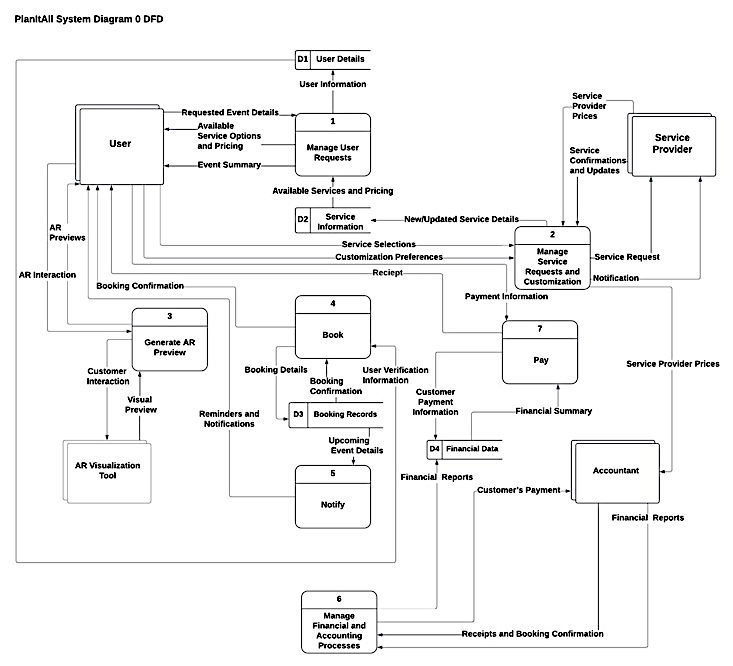 Figure 1. PlanItAll Data Flow Diagram (Level 0)
D. Prototype Development
Figure 1. PlanItAll Data Flow Diagram (Level 0)
D. Prototype Development
A working prototype of the "PlanItAll" platform was developed using Wix, based on the system design previously established. Wix was chosen for its user-friendly interface and flexibility, allowing for rapid prototyping and easy adjustments. This prototype acts as an initial version of the platform, which can be extensively tested and evaluated for usability and functionality. This phase is crucial for gathering initial user feedback and making necessary improvements to enhance the overall experience.
The homepage welcomes users with "Creating Unforgettable Memories – One Event at a Time," and features a "Start Planning" button that takes users directly to the services page to begin planning. When users visit the services page, they can choose their event type as shown in Figure 2, whether it’s a private party, corporate event, or wedding. Each category includes detailed service options to help users find exactly what they need. Users can book venues, catering, décor, entertainment, and photography for private parties like birthdays and graduations. Corporate events offer venue rental, speaker arrangements, and branding for a professional setup. Weddings provide full planning, partial assistance, or customizable packages, letting couples decide their level of involvement.
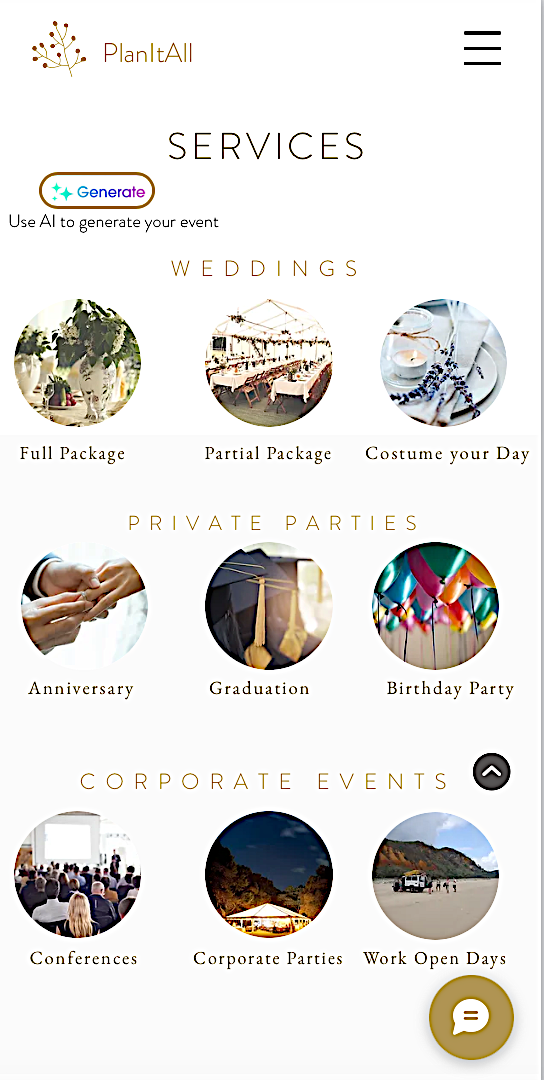 Figure 2. Services Page with “AI Generate” button at the bottom.
Once users select their event type, they are guided to the booking page, where they can browse all many types of available services, compare options, and make selections. Each service displays images, descriptions, pricing, and duration, making it easy to decide. Clicking “Book Now” takes users to a calendar view, where they can choose a date and time, review service details, and confirm their booking as shown in Figure 3.
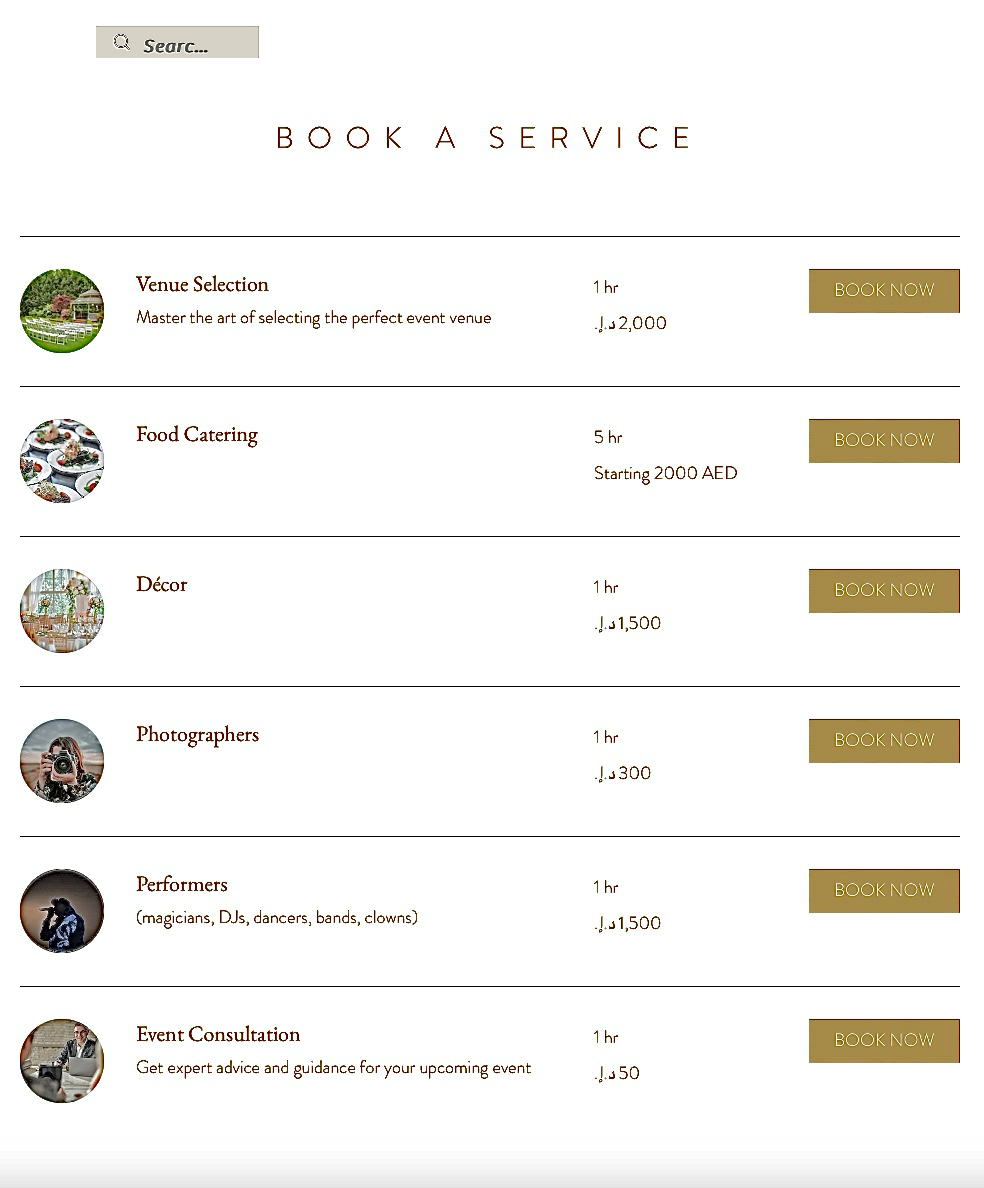 Figure 3. Booking a Service Page
To make planning even more interactive and stress-free, Augmented Reality (AR) lets users visualize their event setup in real time, adjusting layouts, décor, and seating before finalizing. AI customization helps by suggesting the best vendors, layouts, and themes based on user preferences, ensuring that every event is perfectly tailored. With PlanItAll, users can plan their event from start to finish in one place, with full control over every detail, making event planning more exciting, efficient, and enjoyable.
E. Testing Plan
To ensure the reliability, functionality, and usability of the PlanItAll platform, a comprehensive testing plan was implemented. Functional testing was carried out to confirm that each feature, including event creation, service booking, AR layout customization, and AI-driven recommendations, performed as expected. Usability testing involved observing users as they navigated the platform to identify any design or interaction issues, ensuring an intuitive experience. Performance testing evaluated system responsiveness, loading times, and the stability of AR rendering under varying user loads. Security testing focused on protecting sensitive data and ensuring the safety of payment transactions through proper encryption and secure authentication protocols. Compatibility testing verified that the platform worked seamlessly across different web browsers and on both Android and iOS devices with AR support. Finally, user acceptance testing (UAT) was conducted to assess whether the platform met users' needs in real-world planning scenarios and provided a smooth, stress-free planning experience.
IV. DISCUSSION
PlanItAll is more than just an event planning tool—it is a fully integrated platform that transforms the way events are organized, customized, and executed. Unlike other planning applications that focus on specific aspects such as venue selection or catering, PlanItAll offers a comprehensive solution that covers every stage of the planning process. By incorporating Augmented Reality (AR) and Artificial Intelligence (AI), the platform enhances user control, improves efficiency, and reduces the stress commonly associated with event planning.
One of PlanItAll’s key features is AR-powered event visualization, which allows users to design and adjust their event layouts in real time. Unlike traditional planning apps that rely on lists and descriptions, this feature gives users the ability to place decorations, adjust seating arrangements, and finalize layouts by viewing them directly in their chosen venue space. This reduces uncertainty and last-minute changes, ensuring that the final setup aligns perfectly with expectations.
Another major advantage of PlanItAll is AI-driven customization, which personalizes the planning experience by learning from user preferences and suggesting tailored event elements. Instead of manually searching for vendors or browsing generic options, users receive smart recommendations for venues, decorators, caterers, and other services based on their specific needs and past choices. This saves time, optimizes decision-making, and enhances user satisfaction, making the planning process smoother and more enjoyable. Beyond its use of AR and AI, PlanItAll also stands out for its all-in-one booking and vendor management system. Unlike many platforms that focus only on planning logistics, PlanItAll allows users to directly book services within the platform, eliminating the need for multiple third-party interactions. This feature ensures seamless coordination between vendors and organizers, reducing miscommunication and delays.
While many event planning apps are designed primarily for professional event managers, PlanItAll is built to be accessible to anyone organizing an event, whether it’s a wedding, graduation, conference, or private gathering. The platform allows users to actively participate in designing and finalizing their events, rather than relying entirely on external coordinators. This level of user involvement makes the planning process more interactive and engaging, giving individuals the confidence to plan successful events with ease.
V. CONCLUSION AND FUTURE WORK
This paper presented PlanItAll, a centralized event planning platform that integrates Augmented Reality and Artificial Intelligence to address the common challenges faced in organizing events. By allowing users to visualize event layouts in real time and receive intelligent vendor recommendations, the platform enhances decision-making, reduces stress, and simplifies coordination. Early development and user feedback confirm the system’s potential to improve efficiency and user satisfaction in both personal and professional event planning.
Looking forward, future work will focus on enhancing the AI recommendation engine, expanding the AR feature to support more advanced spatial interactions, and developing a fully functional mobile application. Additional features such as guest management, real-time collaboration between multiple users, and deeper integration with vendor networks will also be explored. These improvements aim to make PlanItAll more scalable, intelligent, and accessible to a wider audience.
REFERENCES
[1] J. X. Leong, “Wedding planner application using augmented reality,” eprints.utar.edu.my, Apr. 14, 2021. http://eprints.utar.edu.my/4262/
[2] T. Lameirão, M. Melo, and F. Pinto, "Augmented Reality for Event Promotion," in Computers, vol. 13, no. 342, 2024. [Online]. Available: https://doi.org/10.3390/computers13120342
[3] P. S. Hada, Y. Hada, B. Hada, and P. Hada, "AI based Event Management Web Application," 2022 International Conference on Machine Learning, Big Data, Cloud and Parallel Computing (COM-IT-CON), Faridabad, India, 2022, pp. 562-566, doi: 10.1109/COM-IT-CON54601.2022.9850551.
[4] D. A. C. Wieland et al., "Augmented and virtual reality in managing B2B customer experiences," Industrial Marketing Management, vol. 119, pp. 193–205, 2024, doi: 10.1016/j.indmarman.2024.04.007. Available: https://research-ebsco-com.zulib.idm.oclc.org/linkprocessor/plink?id=7df774f8-4533-32ba-8da4-398d17fb23f2. Accessed: Feb. 20, 2025.
[5] J. S. Madray, “(PDF) THE IMPACT OF COVID-19 ON EVENT MANAGEMENT INDUSTRY,” ResearchGate, Aug. 2020. https://www.researchgate.net/publication/343851988_THE_IMPACT_OF_COVID19_ON_EVENT_MANAGEMENT_INDUSTRY
[6] Asana, Inc., "Asana," Mobile App, Version 2.3.0, 2025. [Online]. Available: https://asana.com/download. [Accessed: 21-Feb-2025].